

Retirement Homes in Niagara: What Are the Roles of Protein, Fibre & Vitamin-Rich Meals?
Food is far more than sustenance for older adults. It is medicine, comfort, and community all at once. In retirement homes in the Niagara Region and elsewhere, the quality of daily meals directly shapes how residents feel, move, think, and connect with one another. Yet nutrition often gets treated as an afterthought rather than a cornerstone of senior care.
This blog explores the specific roles that protein, dietary fibre, and essential vitamins play in supporting seniors. It also highlights why families searching for trusted retirement living facilities in Niagara Falls should place nutritional quality near the top of their checklist when evaluating a home.
Across retirement homes in Niagara, the facilities that truly stand out do so largely because of how seriously they take what goes on the plates of their residents each day.
Why Do Nutrition Requirements Change as We Age?
The human body undergoes significant physiological shifts after the age of 65. Muscle mass naturally declines in a process called sarcopenia. As per research published in the Journal of Cachexia, Sarcopenia and Muscle, adults lose between 3% and 8% of muscle mass every 10 years after the age of 30, with rates accelerating considerably past sixty.
Along with this, appetite among seniors often decreases due to slower digestion, changes in taste and smell, and reduced physical activity. Certain medications commonly prescribed in later life affect nutrient absorption and appetite as well. Taken together, these changes mean that seniors are at higher risk of nutritional deficiencies even when calorie intake appears adequate.
For families considering retirement homes in Niagara Falls, Ontario, or elsewhere, understanding these physiological realities helps explain why professionally structured meal programs are so important. A well-designed menu for older adults looks quite different from a general healthy-eating plate. It prioritizes specific macronutrients, accounts for digestive sensitivities, and carefully incorporates micronutrients that aging bodies absorb less efficiently over time.
Protein: The Foundation of Strength and Recovery
The prevention of disease requires the appropriate formation of antibodies. Therefore, protein does much more than just build muscles. It is essential for the production of antibodies that fight infection, the synthesis of enzymes and hormones, and the repair of tissue after illness or surgery. For seniors living in retirement homes near the Niagara Region or elsewhere in Ontario, adequate protein intake is particularly relevant to recovery.
Whether a resident is bouncing back from a hip replacement or managing a chronic condition, protein supply directly influences the speed and completeness of that recovery.
Lean meats like chicken, turkey, and fish are excellent sources. So are plant-based proteins such as lentils, chickpeas, and edamame—which happen to contribute fibre and micronutrients simultaneously.
Also, eggs and dairy products, including Greek yogurt and cottage cheese, offer highly bioavailable protein that is easy to chew and digest—an important consideration for seniors with dental challenges.
Dietary Fibre: The Quiet Engine of Digestive and Cardiovascular Health
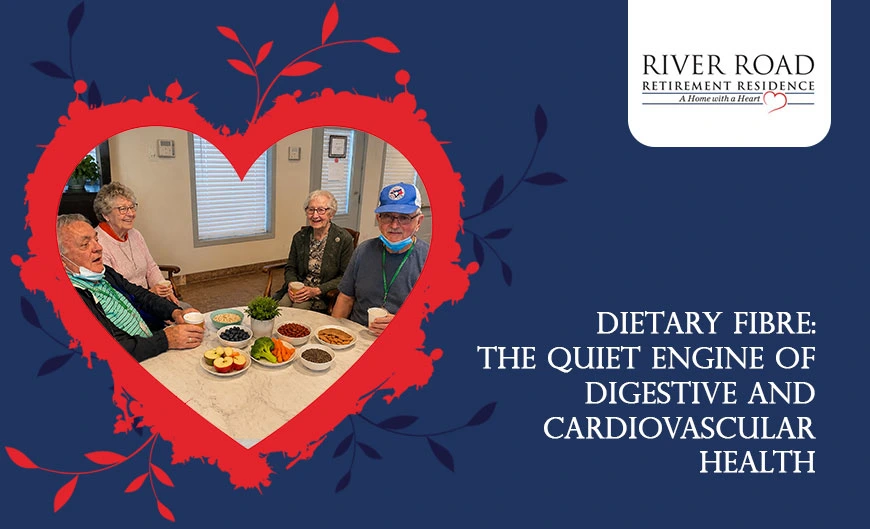
Dietary fibre’s benefits extend well beyond the gut. Soluble fibre found in oats, apples, barley, and flaxseed lowers LDL cholesterol levels significantly.
For seniors managing type 2 diabetes, soluble fibre plays a meaningful role in slowing glucose absorption and stabilizing blood sugar levels throughout the day. A genuinely fibre-conscious menu does not rely on supplements to hit daily targets. Instead, it weaves high-fibre foods naturally into meals throughout the day.
A fibre-rich day can start with oatmeal topped with blueberries and ground flaxseed. For lunch, seniors may enjoy vegetable and barley soup with whole-grain bread. Later in the day, apple slices with almond butter can make a simple yet healthy snack. Lastly, for dinner, the menu can include foods like roasted sweet potato, steamed broccoli, or chickpeas served with a lean protein.
As fibre intake goes up, drinking enough water becomes just as important. Fibre needs water to move properly through the body. That is why many retirement homes in Niagara Falls encourage seniors to drink fluids throughout the day, not just during meals.
Essential Vitamins: Filling the Gaps That Aging Creates
Vitamin D and Calcium: A Pair That Cannot Be Separated
As people get older, keeping bones strong becomes even more important. Calcium helps build and maintain bone strength, while vitamin D helps the body in absorbing and using calcium properly. Even if a senior gets enough calcium from their diet, low vitamin D levels can make it harder for the body to benefit from it. That is why both nutrients are essential for maintaining the level of bone density and reducing the risk of fractures.
For many seniors, getting enough vitamin D from sunlight is not always easy. The skin does not make vitamin D as well with age, and older adults may also spend less time outdoors. That is why foods like salmon, mackerel, sardines, eggs and dairy products can be helpful additions to their diet.
Vitamin B12: A Micronutrient Quietly Running Out
Vitamin B12 is necessary for nerve function, formation of red blood cells, and DNA synthesis. The challenge in older adults is absorption, not intake. As the stomach lining ages, it produces less hydrochloric acid and a protein called intrinsic factor—both of which are required to extract B12 from food.
A deficiency of vitamin B12 can quietly cause memory problems, fatigue, depression, and tingling in the extremities. Some may mistake these symptoms for normal aging or attribute them entirely to other conditions.
Animal products – meat, fish, dairy, and eggs are the primary dietary sources. Notably, B12 in fortified foods is more readily absorbed by older adults because it does not require stomach acid. Nutritionally aware retirement homes in Niagara Falls, Ontario, incorporate fortified cereals and dairy products as a routine part of the menu specifically for this reason.
Vitamin C, Vitamin A, and Antioxidant Protection
Aging is accompanied by a gradual increase in oxidative stress, an imbalance between free radical production and the body’s antioxidant defences. Vitamins C and A are central players in managing this process. Vitamin C, which is abundantly present in citrus fruits, bell peppers, kiwi, and strawberries, supports immune function, accelerates wound healing, and enhances iron absorption from plant-based foods.
Vitamin A is found in foods like liver, dairy products, carrots, sweet potatoes, and leafy greens. It helps in supporting healthy vision, skin, and the overall immune system. Therefore, serving Vitamin A-rich foods is essential in retirement homes in the Niagara Region, especially where seniors may be managing health issues or recovering from illness.
Hydration: The Nutrient Most Often Overlooked
In retirement homes, dehydration is considered among the most underappreciated health risks for older residents. Older adults experience a reduced sense of thirst even as their kidneys become less efficient at conserving water. Mild or chronic dehydration in seniors contributes to further health complications like urinary tract infections, kidney stones, mental confusion, constipation, and falls.
Some retirement homes in the Niagara region add hydration strategies to the diet for seniors that extend beyond water glasses at the dinner table. This includes herbal teas, broths, fruit-infused water, smoothies, soups, and high-water-content foods like cucumber, watermelon, and zucchini, all of which contribute meaningfully to daily fluid intake.
It is important to know that well-run homes track fluid intake as part of their wellness monitoring, particularly for residents with health conditions that increase the risk of dehydration.
Choosing a Home That Takes Nutrition Seriously
For families evaluating retirement homes in Niagara Falls, Ontario, or broader options across the Niagara Peninsula, enquiring about the diet structure is important. Some questions worth raising include:
- Does the home work with a registered dietitian to design its menus?
- How are residents with dietary restrictions, allergies, or medical conditions like diabetes accommodated?
- Are there meaningful meal choices offered at each sitting, rather than a single set option?
- How does the facility monitor residents’ nutritional status?
- Is the dining room a warm, social space or purely functional?
A retirement home that answers these questions thoughtfully demonstrates that it views nutrition as a health priority rather than a background operational detail. At River Road Retirement Residence in Niagara Falls, values like emphasizing nutritional needs are embedded in daily life rather than listed in a brochure.
Situated near the scenic Niagara River, the residence brings together the warmth of a private home with comprehensive care within the setting. With professional culinary staff preparing nutritionally balanced meals and snacks every day, and attention to the specific dietary needs, residents living here are meant to thrive in every way.
The dining room is designed for unhurried connection—a place where residents gather not just to eat, but to share conversation, laughter, and the simple pleasure of a well-prepared meal.
Meals can support strength, comfort, dignity, and connection when they are planned with care. While adequate protein preserves the muscle strength that keeps seniors mobile and independent, dietary fibre supports both digestive and cardiovascular health. Essential vitamins patch the specific gaps that aging physiology creates. And the social ritual of sharing a meal adds a dimension of emotional nourishment that no supplement can replicate. Families exploring retirement homes in the Niagara Region want more than a comfortable roof over their loved one’s head. They want a place where food is genuinely respected as a vehicle for health and connection. So, ask questions. Visit at mealtime. Speak with residents about their dining experience. The answers will tell you a great deal about how a home truly operates from the inside.