
10 Benefits of Life in a Niagara Falls Retirement Community
One of the most immediate benefits seniors notice after moving into a Niagara Falls retirement community is how much lighter daily life feels—no more property maintenance, no more isolation, and no more worrying about what happens if something goes wrong. For many older adults across Ontario, choosing a retirement community in Niagara Falls turns out to be one of the best decisions they ever make.
Niagara Falls is not just a landmark destination. It is a city with strong healthcare infrastructure, genuine community character, and natural surroundings that make everyday life more enjoyable.
Seniors who relocate here often find that the combination of professional support, social connection, and a beautiful living environment gives them a quality of life that living independently at home simply cannot match. Whether the priority is health, finances, relationships, or simply having more fun, retirement living in Niagara Falls has something real to offer.
Let’s look in detail at the benefits that seniors enjoy after starting to live in a retirement home in Niagara Falls.
Key Takeaways
|
What Are the 10 Benefits of Living in a Niagara Falls Retirement Community?
Choosing where to spend their retirement is one of the most personal decisions a person can make. For seniors and their families weighing the options, understanding the concrete, day-to-day advantages of community living helps cut through the uncertainty.
Below are ten genuine benefits—not marketing promises—that residents of retirement communities in the Niagara Falls area consistently experience.
1. Built-In Social Connection That Actually Reduces Loneliness
Loneliness among older adults is a serious concern in Canada. Chronic social isolation can increase the risk of depression, cognitive decline, and even cardiovascular disease. Senior living in Niagara Falls addresses this directly.
In a retirement community, residents share their meals, participate in group activities, and live among people at similar life stages. The social connection that forms is not forced—it develops naturally through shared spaces, common routines, and genuine mutual interests. Many residents describe the friendships they form in community living as some of the most meaningful of their lives. That kind of regular human contact is simply difficult to replicate when living alone in a private home.
2. Access to Professional Support Without a Clinical Environment
A significant concern for many seniors and their families is what happens when health needs arise unexpectedly. A supportive retirement community in Niagara Falls provides trained staff around the clock, without making residents feel like patients.
The goal here is to support independence, not replace it. Residents go about their daily lives with the quiet reassurance that help is always within reach. Families, in turn, stop spending mental energy on worst-case scenarios and start spending time simply enjoying their visits.
3. Improved Physical Health Through Active Programming
Most retirement communities offer fitness classes, walking programs, swimming access, and group exercise sessions designed specifically for older adults.
The social element of these activities matters. People are far more likely to stay consistent in their fitness when they exercise alongside peers and work with instructors who know their needs.
4. Greater Financial Predictability and Reduced Home Ownership Costs
A lot of seniors are surprised to find that moving into a community actually costs less than keeping up a private home once everything is added up. Property taxes, repairs, insurance, utilities, landscaping- it all adds up year after year, and much of it is hard to plan for. A furnace that suddenly gives out or a roof that needs fixing can throw off an entire year’s budget without much warning.
Independent living in the Niagara Region consolidates most of these costs into a single monthly fee covering accommodation, meals, housekeeping, activities, and often transportation. In short, the financial clarity alone brings a significant reduction in day-to-day stress.
5. Location That Genuinely Enhances Everyday Life
Few cities in Canada offer what Niagara Falls does for retirees. World-class natural scenery, a well-established medical infrastructure anchored by Niagara Health, proximity to the Greater Toronto Area for family visits, and a pace of life that feels unhurried without being dull.
Retirement living in Niagara Falls means access to vineyards, heritage sites, farmers’ markets, cultural events, and outdoor recreation, all without the congestion or cost associated with larger urban centres.
6. Better Mental Health and Emotional Wellbeing
There’s a real connection between having a daily routine and feeling emotionally steady, especially later in life. Seniors who wake up with something to look forward to, a bit of structure, and regular contact with other people tend to feel noticeably better than those who spend most of their days alone.
That’s really what a retirement community in Niagara Falls tries to build into the everyday life of the senior residents. Morning activities, meals shared with others, evening get-togethers, and the simple habit of seeing familiar faces all add up. Over time, that sense of routine and connection does a lot more for someone’s mental health than people usually give it credit for.
7. Reduced Burden on Family Members
Adult children and other family members often carry a quiet, ongoing anxiety about aging parents living alone. The check-in calls, the concern after a winter storm, the worry following a missed phone call—it adds up, and it affects relationships.
When a loved one is in a well-run retirement community, that anxiety diminishes. Families know that professional support is in place, that their parent is eating well, staying active, and has people around. Reliable senior living communities in Niagara Falls do not remove family from the picture. It improves the picture by removing the undercurrent of worry that can quietly colour every interaction.
8. Cognitive Health Benefits From Daily Stimulation
Staying mentally active, creative, and socially engaged is one of the best-known ways to help protect against cognitive decline and dementia.
Retirement communities in Ontario that offer strong programming—arts & crafts, book clubs, music events, educational workshops, games—are not simply keeping residents busy. They are contributing to the long-term neurological well-being of everyone who participates.
In communities where residents have access to varied, engaging daily activities, the difference in cognitive sharpness compared to isolated seniors is measurable and meaningful.
9. Modern Amenities That Support a Full, Dignified Life
Today’s retirement communities look nothing like the institutional facilities of previous decades. Chef-prepared dining, spa services, libraries, theatre rooms, gardens, and hobby studios are now standard features at well-run residences. These amenities are not indulgences—they are part of what makes community living a genuine lifestyle, not simply a care arrangement.
10. A Sense of Purpose and Belonging That Is Hard to Find Elsewhere
Perhaps the most underrated benefit of retirement community living is the sense of belonging it creates. Residents are part of something—a neighbourhood, a social circle, a shared rhythm of life. That feeling of mattering to others, of being known and noticed, has a profound effect on wellbeing at every age.
What Makes River Road Retirement Residence in Niagara Falls a Strong Fit?
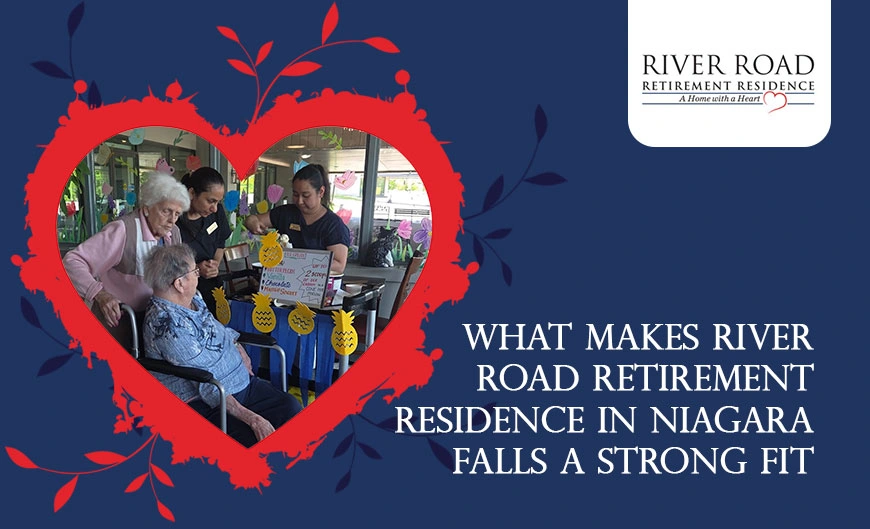
For families actively looking at options in the Niagara Falls area, River Road Retirement Residence offers all the above benefits to its residents and beyond. It offers independent and supportive living within a setting that reflects many of the priorities seniors and families typically care about most. It caters to professional staff, social programming, dining services, comfortable accommodations, and access to the natural and community amenities that make the Niagara Falls area a particularly good fit for retirement. Those considering a move can visit the residence directly to get a firsthand sense of the community culture and speak with staff about what day-to-day life looks like for residents.
Retirement is not a step back. It is a step toward something better when the right environment is chosen. A retirement community in Niagara Falls gives seniors the social connection, professional support, financial clarity, and quality of life that independent home living often cannot. The Niagara Falls area brings its own advantages to the table: strong healthcare, natural beauty, a welcoming community, and a pace of life that genuinely suits this chapter. For seniors and families who take the time to explore these options honestly, the question rarely stays “should we consider this?” It becomes “why did we wait?”
Frequently Asked Questions
1. What is the difference between a retirement community and a nursing home?
A retirement community is meant for seniors who are largely independent and simply want a lifestyle that’s more social and supported than living alone. A nursing home is a different setup altogether, built for people who need ongoing medical care for serious health conditions. The two aren’t really comparable in terms of environment, care level, or the kind of residents they serve. Most people who choose a retirement community aren’t doing it out of medical necessity. They’re doing it because they want to.
2. How do seniors know when it is the right time to move to a retirement community?
There is rarely one single moment that makes the decision obvious, but there are patterns worth paying attention to. If a senior is finding home maintenance increasingly difficult, feeling isolated or unmotivated, missing meals, or experiencing minor health incidents with no one nearby to help, these are meaningful signals. The right time is generally before a crisis forces the move, not after.
3. Is retirement living in Niagara Falls suitable for someone who is still active and healthy?
Yes, and in many ways, active seniors benefit the most from making the move early. Moving in while they are still in good health allows residents to build social connections, establish routines, and take full advantage of programming before any support needs arise. Waiting until a health crisis forces the decision often means the transition is harder than it needs to be.
4. Can residents maintain close relationships with family after moving to a retirement community?
Absolutely. Retirement communities are not closed or restricted environments. Family visits are welcomed and encouraged, and many residences have guest dining and social spaces specifically designed to host family gatherings. For many families, visits become more enjoyable after the move because the underlying worry about a parent living alone has been removed from every interaction.
5. What should families look for when choosing a retirement community in the Niagara Region?
The most important factors include the level of care offered, staff-to-resident ratios, the quality and variety of daily programming, dining standards, transparency of fee structures, safety features, and the overall culture of the community. Visiting in person—ideally more than once, at different times of day—provides a far more accurate picture than any brochure or website can offer.