
What to Look For When Choosing a Retirement Home in Niagara Falls, Ontario
When choosing a retirement home, four things matter the most: the right level of care, quality staffing, full cost transparency, and a genuine sense of belonging for the person moving in. A visually impressive retirement facility means very little if these four foundations are not solid.
However, knowing what matters in principle and knowing how to evaluate it in real life are two different things. Most families in the Niagara Falls area and Southern Ontario start by Googling terms like ‘best retirement homes in Ontario’ online, which is a sensible starting point. But selecting the right retirement home from many options becomes challenging without a clear sense of what to look for once the visits begin.
This decision carries real emotional weight. It involves balancing the safety and comfort of the senior against their independence, care needs, and personal preferences that are not always easy to compare.
Let’s look at the factors to consider when choosing the best retirement homes for seniors, especially in the Niagara Falls area.
Key Takeaways
|
What Does ‘Level of Care’ Mean in Practice?
‘Level of care’ is one of those terms that gets used often in retirement home marketing but is rarely explained in plain language.
In practical terms, it refers to how much daily support a retirement home can provide and what that support looks like. ‘Independent living’ means the resident manages most personal tasks on their own. ‘Assisted living’ means staff are available to help with daily activities such as dressing, bathing, grooming, and medication management. Also, ‘memory care’ refers to specialized support for residents living with dementia or Alzheimer’s disease.
The responsible retirement communities in the Niagara Region and other parts of Ontario explain this honestly and clearly from the very first conversation. They outline what is included in a care plan, what triggers a transition to a higher level of support, and whether that transition can happen within the same facility or requires a move elsewhere. A retirement home that is not transparent about these details during a sales meeting is unlikely to be more responsible once a resident has moved in.
What Families Should Consider During a Tour
When visiting a retirement residence in Niagara Falls or elsewhere, the goal is to pay attention to what is happening independently of what is being shown. For example, are residents gathering in common areas or mostly isolated in their rooms? Do staff greet residents warmly and by name as they pass? Does the building feel like a place where people genuinely live and belong, or does it feel staged for visitors?
One of the most revealing moments of any tour is watching how staff interact with residents when no one appears to be watching. That is closer to the daily reality than any formal walkthrough.
Supportive retirement homes in Niagara Falls, Ontario, are not unsettled by families who ask questions before making decisions about their loved ones’ care. A senior care home that rushes your visit or whose staff are evasive during a scheduled tour is not giving useful information about how it operates in general.
How Much Does a Retirement Home’s Location Affect Daily Life for Its Residents?
A retirement home’s location shapes day-to-day life in meaningful ways. Proximity to parks, medical clinics, places of worship, and familiar local shops gives residents options for staying connected to the wider community beyond the facility’s walls.
For seniors who still drive or use public transit, that access supports independence. For those who rely on family visits, a location that is easy for relatives to reach makes regular contact more likely than occasional contact.
Senior living in Niagara Falls spans a wide geographic range. Some homes sit in quieter residential neighbourhoods away from the city core while others are positioned closer to amenities and transit. The right choice depends on the preferences, personality, and daily habits of the people who will actually be living there.
Why Does Staffing Quality Matter More Than Physical Amenities?
A residence with impressive common areas and modern senior-friendly equipment can still provide a poor experience if the care offered to the seniors is inconsistent. Also, high staff turnover at a retirement residence is one of the clearest warning signs a family can identify during the search process. Residents form real attachments to the people who care for them. Therefore, constant change in staff erodes trust and can leave a senior feeling unsettled even in otherwise comfortable surroundings.
Reliable retirement homes in Niagara Falls, Ontario, like River Road Retirement Residence, hold on to their staff. The evidence of that tends to be visible in the quality of daily interactions between caregivers and residents. Long-tenured staff who know residents well notice subtle changes in health or mood. Treating them with consistent dignity is a quality that no brochure will quantify.
What Does Good Activity Programming In a Retirement Residence Look Like?
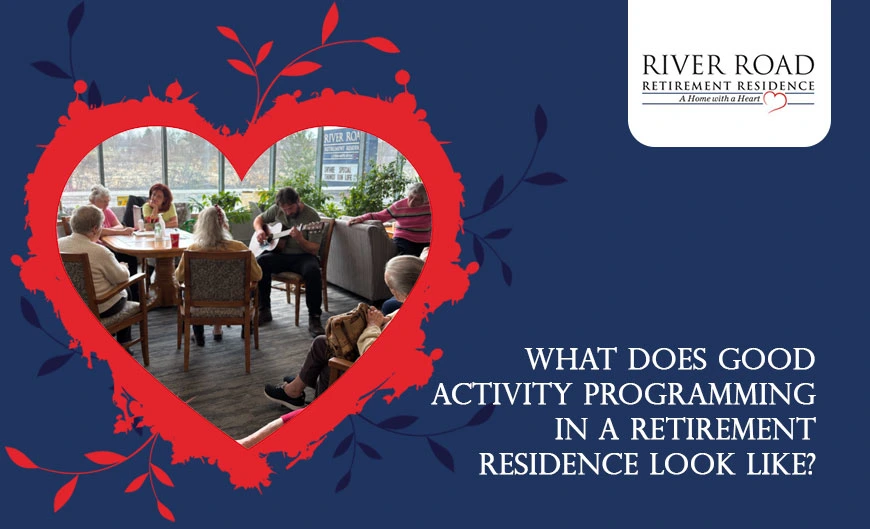
Most retirement homes put together a full activity calendar before a tour. That calendar may look impressive on paper, but the real question is whether those activities are things residents actually enjoy or just scheduled events to fill the day.
Good programming covers a fair range of activities. Some residents want physical activity like walking groups or light fitness. Others prefer creative outlets like art or music. Social events give people a reason to spend time together rather than staying in their rooms. A home that offers all three tends to serve its residents better than one built around a single type of activity.
Flexibility matters too, as not every senior wants a packed social schedule. Some prefer quieter afternoons or time spent on their own terms. A home that only works well for outgoing, group-oriented residents is not a good fit for everyone. At the supportive retirement homes in Niagara Falls, Ontario, the activity program looks lived-in rather than staged. Residents are actually taking part, not just listed on a schedule that no one follows.
Choosing a supportive retirement home where a loved one will spend a meaningful part of their life deserves careful, unhurried research. For families beginning their search in the Niagara Falls area, River Road Retirement Residence is worth placing on an initial shortlist. We offer both independent and assisted living options in a residential setting. As with any home under serious consideration, families are encouraged to visit in person, speak directly with staff, and review all documentation carefully before arriving at a final decision.
Frequently Asked Questions
1. What is the average monthly cost of retirement homes in Niagara Falls, Ontario?
Monthly fees vary based on the level of care a senior receives, type of accommodation, and what services the monthly charges include. For retirement homes located in Niagara Falls specifically, current general ranges run from approximately $3,000 to $5,200 per month. Also, homes that offer memory care or full assisted living support may have their fee structure above that range. For this reason, families should request an itemized cost breakdown from any home they are seriously considering, as additional service fees can add significantly to the advertised base rate.
2. How can families confirm that a retirement residence in Niagara Falls is properly licensed?
The Retirement Homes Regulatory Authority (RHRA) maintains a searchable public directory at rhra.ca. Families can search by home name or address to confirm whether a specific facility holds a current licence. Homes operating without a valid RHRA licence are not legally permitted to provide the personal care services associated with licensed retirement living in Ontario.
3. What is the difference between a retirement home and a long-term care home in Ontario?
Retirement homes are privately operated and funded primarily by residents. They support older adults who need varying levels of daily assistance but do not require complex clinical care. Long-term care homes are government-regulated and subsidized, designed for individuals with more intensive medical and personal care needs. Placement in long-term care is arranged through Ontario’s Home and Community Care Support Services, not directly through the home itself.
4. Can a senior move out of a retirement community in the Niagara Region after moving in?
Yes, though the terms depend on the contract. Most retirement home agreements include a required notice period, typically between 30 and 60 days. Families should review departure conditions, deposit terms, and any clauses related to prepaid fees carefully before signing. A change in health, circumstances, or care needs may make a transition to a different setting possible, depending on the individual situation and contract terms.
5. How should families compare retirement communities in the Niagara Region side by side?
The most grounded approach combines in-person visits with independent research. One can compare well by visiting all the retirement homes at various times of day, checking the RHRA license, comparing the fee breakdown and looking at reviews to get better insight than just reading marketing letters.