

7 Ways Seniors in an Ontario Retirement Home Stay Engaged Without Feeling Overwhelmed
Ontario families often start looking at a retirement home when a parent feels lonely at home. At the same time, families worry that a move to new surroundings may feel confusing for the senior. Both concerns are valid, because loneliness lowers mood and unfamiliar routines in any retirement home can feel overwhelming at first.
The solution is a retirement home that offers daily company without pushing residents to join in. Retirement homes with activities ease loneliness, because social, physical, creative and spiritual programs help seniors meet people. Meanwhile, optional participation and a gentle start help new residents settle in, because they stay in control of their day.
Here are the seven practical ways that seniors can stay involved in retirement homes without feeling overwhelmed, with clear examples. This post also shares simple questions families can ask during visits, which makes comparing communities much easier.
Key Takeaways
|
Why Choose a Retirement Home for Everyday Engagement
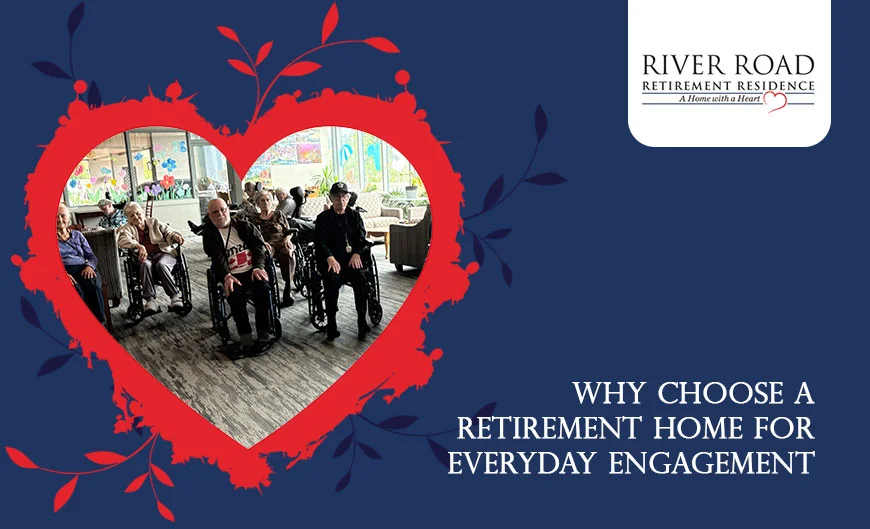
Many seniors manage well at home for years, but gradual changes can make independent living harder. These changes often include reduced mobility, losing a spouse or friends, and struggling with cooking and home upkeep. As a result, families ask why they should choose a retirement home, and the reasons are both practical and emotional.
Here are some of the prominent reasons why families choose retirement homes for their parents:
- The company is close by, because shared meals and fellow residents reduce loneliness that often builds quietly at home.
- Any type of help arrives quickly, since staff are on site and licensed homes must follow safety rules and emergency plans.
- Daily chores disappear because cooking, cleaning, and home repairs are usually handled, which leaves more energy for activities.
- Meals are served in a shared dining room, so seniors eat regularly and chat instead of eating alone.
- Care can grow with changing needs, because many homes offer extra support such as medication reminders.
In a senior retirement home, families also gain peace of mind because they know a parent is supported by caring staff and fellow residents. Many retirement homes in Ontario also offer year-round programs, so their seniors stay active whatever the weather brings.
7 Ways Seniors Can Stay Engaged Without Feeling Overwhelmed
A senior feeling overwhelmed at an Ontario retirement home usually comes from too many new faces, choices, and routines at once, not from activities themselves. None of these ideas require a senior to do everything, so each person can pick what feels comfortable.
1. Start With One or Two Favourite Activities
New residents often feel pressure to join everything early, which can lead to tiredness over time. To avoid this, a better start is to pick one or two familiar activities, like playing card games or a morning walk. Many retirement homes that plan different senior-friendly activities encourage a slow start for new residents without feeling overwhelmed.
2. Mix Social, Physical, and Creative Options
Different types of activities keep days interesting for seniors because they support the body and mind while also fostering a feeling of belonging. For example, gentle exercise classes build balance, while painting or music gives the mind something enjoyable to focus on. A reliable retirement home in Ontario runs all three types of activities—social, physical and creative—weekly, so no senior depends on one program.
3. Choose Small Groups Over Big Crowds
Seniors can feel exhausted because of big gatherings, which is why a table of five or six people often feels easier. For example, hosting a book chat or a shared jigsaw, where people talk quietly and nobody competes with loud music. Also, a retirement home with a garden path might offer a small morning walk in fine weather, especially in the Niagara region.
4. Leave Room for Quiet Time
Rest matters as much as activity, because seniors often enjoy the next event more after a calm morning. For example, reading in a lounge, napping after lunch, or sitting by a window helps seniors recover. Families therefore need not worry when a parent skips an event, since a restful afternoon is healthy.
5. Stay Connected With Family and Community
Family visits, video calls, and outings help seniors feel remembered, because they keep loved ones close. Families looking at retirement homes in Niagara Falls, Ontario, often enjoy outings such as waterfront walks and scenic drives. Even in a retirement home, regular family contact lifts a senior’s mood and keeps days steady.
6. Take On a Role or Purpose
Purpose matters at every age, and a small role gives a senior a reason to join in. Examples include helping in the garden, greeting new residents, leading a trivia hour or knitting items for charity.
7. Keep Learning Something New
Learning keeps the mind active, so talks, language chats, tablet lessons, and history clubs all offer real value. Even one short class each week adds structure to the day and something pleasant to look forward to. Learning together also builds friendships faster, which is another benefit of life in a senior retirement home.
How to Choose a Retirement Home That Gets the Balance Right
Knowing these seven ideas helps, but spotting them in a real senior community requires some careful checking. When learning how to choose an Ontario retirement home, families can begin with the following:
- Ask for several months of past activity calendars, because one week rarely shows the full picture.
- Visit during an activity and watch how residents and staff interact, since that shows the real atmosphere.
- Ask how staff respond when a resident prefers privacy, since respect for choice protects comfort.
- Check whether outings, transportation, and accessibility are included in the monthly cost, because hidden fees can cause stress.
- Share a meal there, because dining is often the most social part of the day.
A trusted retirement home in Ontario like River Road Retirement Residence will welcome these questions and answer each one clearly. Location also matters, since a retirement home in the Niagara Region may suit seniors who love gardens and fresh air.
It is important to understand that staying engaged as one gets older isn’t about filling every hour. It’s about living with intention, maintaining connections, and holding onto a sense of who you are. The right retirement home in Ontario understands that seniors are not a uniform group. Each resident carries a unique history, a specific set of interests, and a particular way of engaging with the world around them. Families making this hard decision for their parent or any older adult deserve a community that gets this right—one where variety, flexibility, and genuine respect for the individual aren’t afterthoughts, but the place’s actual culture. That’s the difference between a community where seniors merely reside and one where they truly live.
Frequently Asked Questions
What activities do retirement homes offer?
The range of activities varies by community, but most retirement homes conduct fitness classes, walking groups, art sessions, music programs, games, faith services, and educational talks. Also, communities that run a full activity program typically share a monthly calendar in advance, which gives families a clear picture of what daily life looks like before they commit to a visit.
How can a senior avoid feeling overwhelmed by a busy schedule?
The simplest approach is to treat the activity calendar as a menu, not a to-do list. Starting with one or two familiar programs and building from there at a comfortable pace works well for most residents. Good communities expect this and are happy to adjust the plan along the way — rest days aren’t a setback – they’re just part of a healthy routine.
What is the difference between a retirement home and long-term care?
A retirement home in Ontario is a privately operated residence where seniors choose to live independently, pay for their housing and selected services, and remain in charge of their own daily decisions. These homes are regulated under the Retirement Homes Act, 2010 and licensed by the Retirement Homes Regulatory Authority. Long-term care is a separate category entirely — publicly funded, provincially placed, and designed for individuals who need 24-hour nursing support that goes well beyond what a retirement residence provides.
At what age do people usually move into a retirement home?
No set age exists, although many people move in their 70s or 80s depending on health and safety. Moving slightly earlier often gives seniors more time to settle in and enjoy the available activities.
How do seniors make friends in a retirement home?
Seniors get the opportunity to make connections during shared meals, small clubs, and regular classes, as participating in these activities with familiar faces helps them make friends. Staff can also introduce new residents to neighbours who share similar interests, which speeds up the process.