

Pet Care Assistance: How It Offers Emotional Help for Elderly Retirement Home Residents
If you ever visit a home for seniors, you may notice the silence that often prevails in the common areas and hallways. This may be the result of emotional isolation or repetitive routines that sap residents of their desire to chat and laugh.
But the presence of a pet is a powerful strategy for addressing the emotional care of seniors that can transform this quiet into laughter. That’s because cheerful interactions with a pet improve their mood and cognitive functioning.
These benefits have encouraged many senior living facilities to offer what’s called pet care assistance for their elderly residents. Here, we look at how the presence of a pet in a retirement home can foster strong connections among senior residents and bring back the joy that was once lost.
Why Emotional Engagement in Retirement Years Matters More Than Ever
Emotional engagement is necessary for everyone, including seniors, especially those living under assisted care. Facilities in scenic areas like Niagara Falls, like ours, offer their residents the chance to enjoy the area’s panoramic beauty. But being away from family can lead to loneliness among seniors. This loneliness can lead seniors to experience a loss of purpose after retirement. When their emotional engagement fades, it can affect their physical and mental health, including cognitive sharpness.
That’s why reputable retirement homes like River Road Retirement Residence offer pet care assistance to their seniors, along with excellent amenities and various events to boost social engagement.
Understanding the Emotional Benefits of Pets Around Seniors

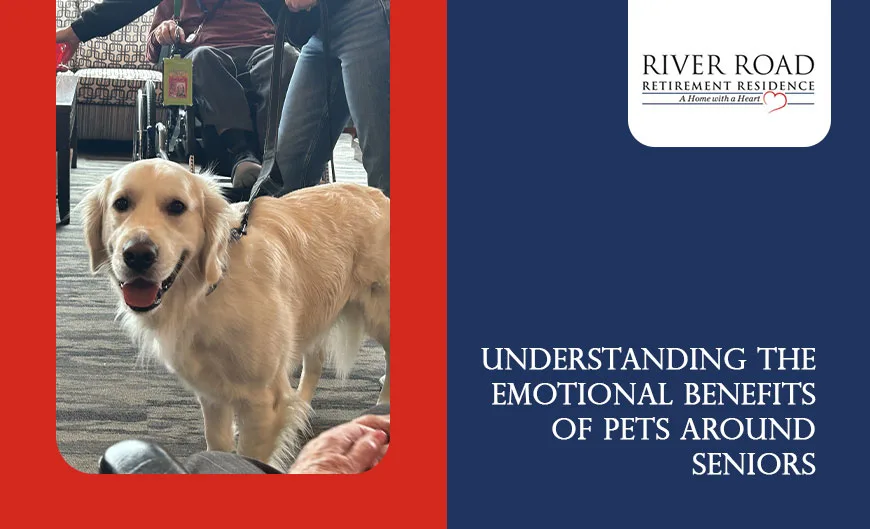
Pets, especially dogs, offer seniors a sense of companionship without judgment or explanation. They can offer emotional comfort during moments of sadness or anxiety. Moreover, with consistent interaction, seniors can find a renewed sense of purpose. These benefits may sound simple, but their impact is immense.
How Pets Improve the Moods of Seniors Living in Retirement Homes
Improving a senior’s mood doesn’t always require a big intervention. Sometimes it just takes a moment of joy provided by a puppy wagging its tail when they enter the room.
Pets have the power to create remarkable engagement without expectations. They don’t ask seniors to remember names, follow conversations, or explain themselves. But in a present, affectionate, and responsive way, they create a deep connection without words.
Cognitive Engagement Through Simple, Meaningful Interactions
Cognitive decline is one of the greatest fears seniors face, especially those prone to Alzheimer’s disease, a common health issue among seniors. While pets cannot reverse these conditions, they can stimulate the mind in gentle, meaningful ways.
Offering pet care assistance to senior citizens:
- Helps them recall stories about their past pets.
- Ensures that they stay mentally present during interactions.
- Fosters attentiveness and focus, even for brief moments.
Let’s understand in detail how the presence of a pet can transform the cognitive functions of seniors who need assisted care.
1. How Pets Help Seniors Who Need Assisted Living Support
For seniors who require assisted living support or are considering a retirement facility, their emotional well-being is a critical concern. During this stage, this reduced independence can lead to frustration, sadness, or withdrawal from the world.
In such circumstances, providing pet care assistance to the elderly can reduce their feelings of helplessness and uncertainty by fostering emotional safety without pressure. Even seniors who cannot physically care for a pet benefit immensely from shared or resident pets within a facility. This meaningful interaction without the burden of responsibility removes stress while preserving joy.
2. Supporting Seniors with Dementia, Parkinson’s, and Age-Related Conditions
When working closely with seniors experiencing dementia or Parkinson’s disease, it becomes clear that sometimes emotional memory can outlast factual memory.
Pets have the power to beautifully engage with that emotional memory. This boosts the cognitive functioning of seniors diagnosed with early or middle-stage dementia.
- How Pets Help Seniors with Dementia
Daily interaction with familiar pets reduces agitation and anxiety in seniors and builds a sense of safety. Moreover, this interaction can foster long-term memory restoration. Seniors who struggle to remember names light up instantly at the sight of a dog, calling it “my friend” or “my boy,” and that connection, even for a fleeting moment, is real.
- Effect of Pets on Seniors with Parkinson’s Disease
For seniors living with Parkinson’s, interacting with pets may temporarily reduce their tremors and boost calm and relaxation. This emotional focus helps shift attention away from any discomfort, even for a few moments.
Studies consistently show that interacting with pets can lower stress hormones like cortisol and increase feel-good chemicals such as serotonin and oxytocin. But beyond science, what truly matters is what seniors experience in their heart—including calm, lightness, and connection.
How the Presence of a Puppy at River Road Retirement Residence Is Bringing Joy & Laughter
At River Road Retirement Residence, one gentle presence is standing out as a living, breathing source of connection: a puppy named River. River has become part of the daily emotional life for many of our senior. Their presence is not about entertainment; it’s about a strong connection that every senior feels.
River has become a familiar and comforting figure among our seniors. With her presence, we have noticed significant changes as residents have increased their interaction levels and are creating shared moments of joy and conversation. They even talk about River when she isn’t there, wondering when she will arrive, creating emotional engagement in its purest form.
How River Is Helping Seniors at River Road Feel More Alive
The presence of River has had a strong, positive impact on our seniors, fostering emotional engagement and making this a place of happy hearts. Whenever River is around, they naturally begin interacting with each other. This encourages communication and improves cognition.
You can hear more laughter, even from seniors who are generally quiet. River’s role in this pet care assistance program is not therapeutic in a clinical sense. Instead, she simply exists alongside our senior citizens, offering her presence, affection, and a reason to smile. That in itself is a meaningful contribution to their emotional and cognitive well-being.
How River Road Retirement Residence Encourages Pet-Based Interaction as Emotional Care
Pets are important emotional companions. At River Road Retirement Residence, we have thoughtfully integrated interaction with River to humanize the environment and reduce emotional isolation among our seniors.
We understand how difficult it is for the seniors who struggle to articulate their feelings and needs. For them, the presence of a pet offers comfort, support, dignity, and emotional expression that goes beyond words.
Offering pet care assistance for elderly residents of a senior facility, even for a short period, can change their emotional landscape. As old age can bring emotional and physical uncertainties, especially for seniors, the presence of a pet can significantly reduce loneliness and encourage cognitive engagement. Thanks to the animals, retirement homes can restore emotional connections among their residents and bring joy back into their lives. Whether it’s a quiet moment of petting soft fur or the shared excitement of waiting for a puppy like River to arrive each day, these experiences matter. They remind seniors that connection is still possible, that joy still arrives unexpectedly, and that companionship never has to end.